| Posted January 19, 2026 | By Joshua Lomelino, M.F.A. | Categorized under Memberships Mastery Podcast |

You have seventeen browser tabs open right now.
Twelve are about business strategies you'll "read later." Three are competitor sites you're analyzing. Two are design inspiration for the landing page you've been tweaking for the past month.
And somewhere in your documents folder sits that course, membership, or product you've been "almost ready" to launch for... how long now? Six months? A year? Three years?
Here's what no one tells you: The thing you're afraid to launch imperfectly is the exact thing your future customers are desperately searching for right now. While you're perfecting module seven, someone else with a messier solution and clearer promise is cashing their first payment notification.
I know this because I wasted three years of my life—1,095 days—building a business that existed only in my head. Not because I lacked skill. Not because I didn't work hard enough. But because I believed the deadliest lie in entrepreneurship:
Success requires perfection.
In the next 8 minutes, you'll discover:
This is for you if:
Entrepreneurs rarely fail because they lack ideas. They fail because they can't release those ideas until they're "perfect."
That was me for three grueling years. I believed success required flawless execution: every module polished to a mirror shine, every funnel airtight without a single leak, every automation bulletproof against any possible scenario. I convinced myself that credibility depended entirely on perfection—that launching anything less would expose me as a fraud.
So I planned with obsessive detail. I edited until my eyes burned. I revised the same sales copy seventeen times. My whiteboard became a maze of features and flowcharts, my calendar a rainbow of color-coded launch dates that kept sliding further into the future. And yet, nothing—absolutely nothing—ever went live.
The irony was suffocating: I was building a business empire that existed only in my head.
Perfection looked productive from the outside. It felt like meaningful progress when I spent twelve-hour days tweaking landing pages and reorganizing course modules. But underneath the busy work, perfection was procrastination in an expensive three-piece suit.
Every single week I delayed launching cost me more than just time—it cost me irreplaceable opportunity. While I was tinkering with font choices and debating whether my logo needed more gradient, my competitors were out there in the wild. They were signing up real members, collecting brutal but valuable feedback, iterating based on actual data, and improving their offers in real-time.
Meanwhile, I was still sketching business plans on sticky notes, trapped in an endless loop of "just one more revision."
The truth hit me like a freight train: perfection wasn't protecting my reputation. It was paralyzing my potential.
I'll never forget the night I finally broke free from perfection's stranglehold. It was 11:47 PM on a Tuesday in March, and I had been circling the same sales page copy for six straight days. Every headline had been rewritten. Every bullet point scrutinized. Every testimonial placement questioned.
My cursor hovered over that bright blue "Publish" button like it was a nuclear launch code. Heart pounding so hard I could hear it in my ears. Palms sweating despite the air conditioning. My finger trembling over the trackpad.
And then, in that moment of pure terror and clarity, the realization crashed over me like a cold wave: if I keep waiting for perfect, I'll never launch anything at all.
The math was simple and devastating. Perfect doesn't exist. It never had. It never would.
That night, sitting in my dimly lit office surrounded by empty coffee cups and crumpled notes, I made a decision that would change everything: I decided to embrace imperfection. Not because I suddenly felt confident—confidence was nowhere to be found. But because I realized confidence would only come after action, never before it.
My hand moved almost without permission. I hit publish.
Then I closed my laptop and went to bed before I could change my mind.
What I launched that night wasn't impressive by any traditional metric. It wasn't the towering castle I'd been designing in my head for three years. It was a cabin.
Three elements. That's it. No bells, no whistles, no fancy graphics or complex funnels. It wasn't polished, but it was undeniably real. And reality beats perfection every single time.
Here's what happened next, and I still get chills thinking about it: people joined.
Seventeen members signed up in the first week. Seventeen real people with real problems who handed over real money. Not because my funnel was flawless—it had more holes than Swiss cheese. Not because my videos were professionally produced—I shot them on my phone in my kitchen.
They joined because my promise was crystal clear and my path to results was simple to follow. They weren't looking for perfection. They were desperately searching for results.
That first imperfect launch taught me something that revolutionized how I think about business: readiness doesn't exist.
Read that again. Readiness is a complete myth, a story we tell ourselves to justify delay.
No successful entrepreneur has ever felt "ready." What they felt was committed. Committed to action over analysis. Committed to progress over perfection. Committed to momentum over mastery.
And the fastest path to commitment isn't confidence—it's movement.
This insight flipped everything I thought I knew about launching: Imperfection isn't a liability that holds you back—it's an accelerant that propels you forward.
While perfectionists are still planning their grand debut, the imperfection embracers are already three iterations deep with real customer feedback and actual revenue in the bank.
Here's what three years of perfectionism taught me: You learn exponentially more in one messy, imperfect launch than in six months of theoretical planning.
When you launch imperfectly, you get immediate feedback loops. Real customers tell you exactly what's missing, what's confusing, what's brilliant. That data is worth more than any amount of internal theorizing.
Iteration requires movement. You cannot improve what doesn't exist outside your own head.
This one shattered my entire worldview: Members don't care if your video is shot on an iPhone or in a Hollywood studio. They don't care if your website looks like it was built in 2010 or 2024.
What they care about—what they'll actually pay for—is whether your solution delivers the specific outcome you promised. Period.
I've seen six-figure launches built on Google Docs and seven-figure businesses run from basic WordPress themes. Production value is nice to have. Problem-solving is need to have.
Here's the counterintuitive truth that most entrepreneurs miss: You can always improve a product that exists in the market. But you absolutely cannot improve what only exists in your imagination.
Every successful business you admire started imperfect and improved through customer interaction. Amazon's first website looked like a garage sale. Apple's first computer was built in a literal garage. Facebook began as a basic college directory.
Greatness isn't launched—it's developed.
Here's the paradox that took me three years to understand: Perfection looks safe but is actually the riskiest strategy possible. Imperfection looks risky but is actually the safest path to success.
Why? Because perfection delays the most valuable asset in business: data.
Without real customer data, you're flying blind. You're building solutions to problems that might not exist, for customers you've never actually met, using strategies you've never tested.
Imperfection gets you into the market faster, gathering authentic feedback, building genuine proof of concept, and creating momentum that perfectionism can never match.
Building a business like a castle feels noble and impressive—towering walls that inspire awe, perfectly polished bricks that gleam in the sunlight, every single room completely finished before you dare open the gates to visitors.
Castles take years to build. Sometimes decades. And during all that construction time, you have nowhere to live, no shelter from the storm, no place to invite guests.
Cabins? They go up fast. They provide immediate shelter from the elements. They can be expanded room by room, remodeled based on your actual needs, and reinforced as your family grows and your resources increase.
Your first launch doesn't need to be a cathedral that takes a lifetime to complete. Start with a cabin that works today.
You can always add rooms later.
Even today, years into this journey, I still feel that familiar tug of perfection before every single launch. The voice in my head that whispers, "Just one more day to polish this. Just one more revision to get it right."
But now, instead of giving in to that seductive delay, I have a mantra that cuts through the noise: publish the cabin.
That simple mindset shift has created:
I still improve my content, my systems, my offers—but I do it while earning revenue and serving real customers, not while hiding in perfectionist isolation.
The difference is profound: improvement through market feedback versus improvement through imagination.
If you've been stuck in the planning phase, waiting for everything to feel perfectly aligned, here's your official permission slip: imperfection is not just acceptable—it's the way forward.
Let me be crystal clear about what you actually need:
You don't need polish. You need progress. You don't need readiness. You need commitment.
You don't need permission. You need momentum.
The market will teach you everything you need to know, but only if you show up to class. And class starts the moment you launch, not the moment you feel ready.
Ask yourself these three questions right now:
Your answers will reveal exactly where perfectionism is holding you prisoner—and exactly where imperfection can set you free.
The difference between entrepreneurs who succeed and those who stay stuck isn't talent, luck, or timing. It's the willingness to be publicly imperfect while privately committed to improvement.
I created a free resource called the 21-Day Momentum Map specifically for people who recognize themselves in this story. It shows you the exact steps I used to go from three years of perfection paralysis to launching my first membership in just three weeks.
If you'd like a copy, send me a message and I'll send it to you immediately.
That's it for today's installment. Tune in next time, where we'll talk about what freedom really looks like when burnout stops being a badge of honor.
Because the entrepreneurs who last aren't the ones who work the hardest—they're the ones who work the smartest.
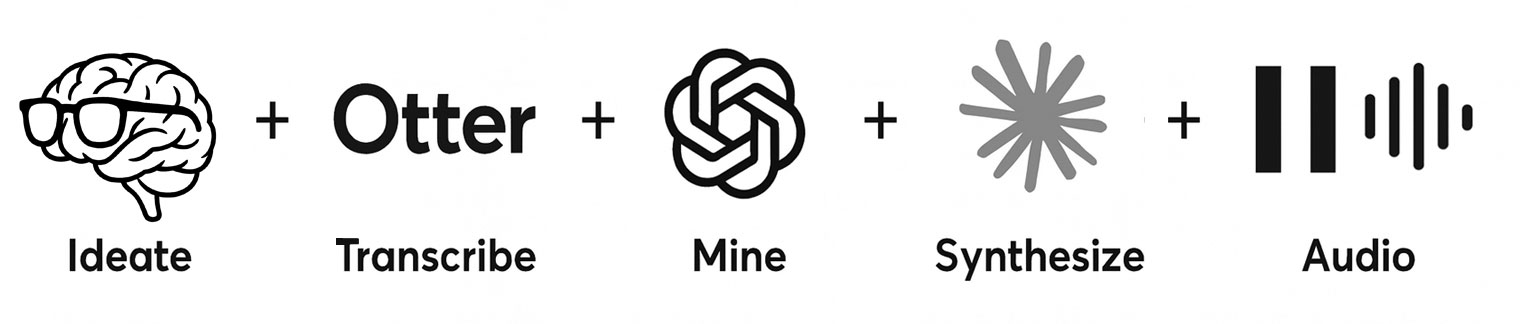
This article, images, and podcast were created with AI assistance. If you would like to learn my process of how I go on walks, talk out my ideas and data mine my thoughts to create content and then automate my vocal performance with 11Labs, you can sign up for my free content creation masterclass here and I'll show you the way. Learn how I've turned over 7 million steps, walking over 3,760 miles into a content generation machine and use AI to data mine my thoughts and generate and polish my content and ideas while getting great exercise outdoors.
By Joshua Lomelino, M.F.A.

Joshua Lomelino, an award-winning designer and educator, developed a framework that eradicated his debts, allowing him to prioritize family time and achieve financial freedom. He transformed his side hustle into a successful venture and now shares his expertise to help others replicate his success. Josh is passionate about helping others make a substantial income with less effort while making a positive impact.
Over the past twenty-five years he’s helped everyone from student entrepreneurs to Fortune 50 companies all over the globe. He’s worked as a graphic designer, web designer, app designer, and full-time educator. He’s dedicated his life to helping others work smarter, not harder. As the founder of Anomaly Studios he has provided digital marketing services, automation, app and UX design, and so much more. His greatest joys are spending time with family and inspiring others to pursue their creative dreams.